
-
 Vendor:Meditrade
Beesana® Vlies compress Unsteril - 100 pieces
Regular price From $1.29 USD From $1.29 USDSale price From $1.29 USD From $1.29 USD Regular priceUnit price $0.00 per$1.29 USD $1.29 USDDelivery
-

 Vendor:Hartmann
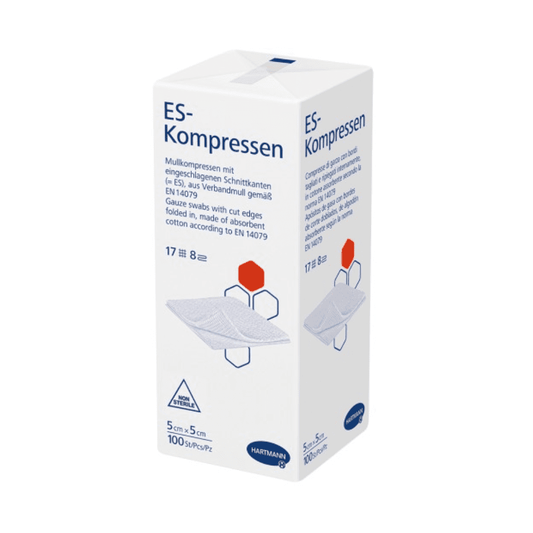
Hartmann es compresses different sizes, unsteril
Regular price From $2.32 USD From $2.32 USDSale price From $2.32 USD From $2.32 USD Regular priceUnit price $0.00 per$2.32 USD $2.32 USDDelivery
-
 Vendor:Hartmann
Hartmann es compresses different sizes, 8 times, sterile
Regular price From $4.00 USD From $4.00 USDSale price From $4.00 USD From $4.00 USD Regular priceUnit price $0.00 per$4.00 USD $4.00 USDDelivery
-

 Vendor:Meditrade
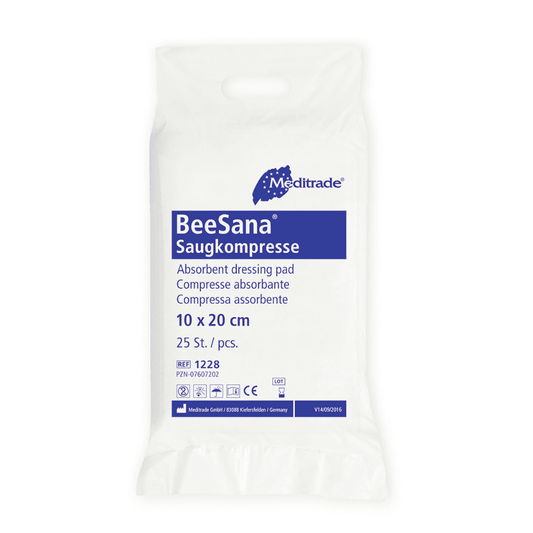
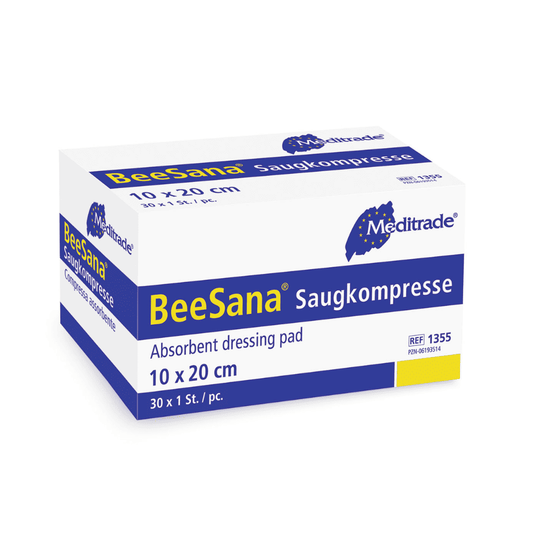
Meditrade Beesana® suction compress - 25 pieces
Regular price From $2.72 USD From $2.72 USDSale price From $2.72 USD From $2.72 USD Regular priceUnit price $0.00 per$2.72 USD $2.72 USDDelivery
-

 Vendor:Meditrade
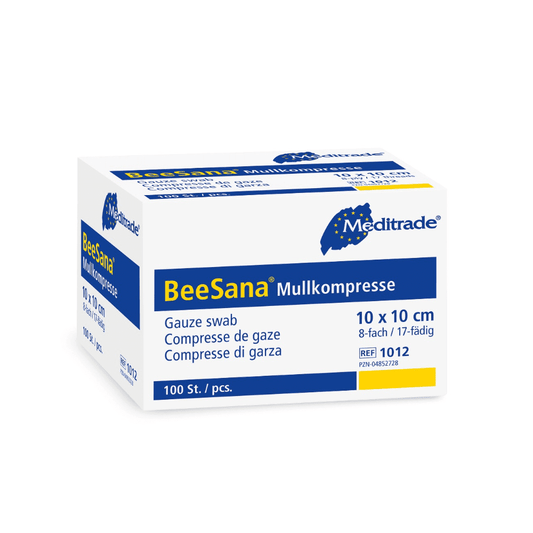
Meditrade Beesana® Mull compress, Unsteril - 100 pieces
Regular price From $1.63 USD From $1.63 USDSale price From $1.63 USD From $1.63 USD Regular priceUnit price $0.00 per$1.63 USD $1.63 USDDelivery
-

 Vendor:Meditrade
Meditrade Beesana® Mull compress, simply sterile, 8 times
Regular price From $1.75 USD From $1.75 USDSale price From $1.75 USD From $1.75 USD Regular priceUnit price $0.00 per$1.75 USD $1.75 USDDelivery
-
 Vendor:Meditrade
Meditrade Beesana® fleece compress sterile
Regular price From $1.63 USD From $1.63 USDSale price From $1.63 USD From $1.63 USD Regular priceUnit price $0.00 per$1.63 USD $1.63 USDDelivery
-

 Vendor:MaiMed
MaiMed-VK non-sterile fleece compresses of 100 pieces/paper bag
Regular price From $1.03 USD From $1.03 USDSale price From $1.03 USD From $1.03 USD Regular priceUnit price $0.00 per$1.03 USD $1.03 USDDelivery
-
 Vendor:Meditrade
Meditrade Beesana® Vlies compress Unsteril 4 times 10 x 10 cm | Pack (100 pieces)
Regular price $2.32 USD $2.32 USDSale price $2.32 USD $2.32 USD Regular priceUnit price $0.00 per$2.32 USD $2.32 USDDelivery
-
 Vendor:Lohmann & Rauscher
Lohmann & Rauscher Zelletten® cell-fabric dabper 5 x 4 cm, 2 x 500 pieces | Pack (2 pieces)
Regular price $6.56 USD $6.56 USDSale price $6.56 USD $6.56 USD Regular priceUnit price $0.00 per$6.56 USD $6.56 USDDelivery
-

 Vendor:MaiMed
MaiMed-VK fleece compresses sterile
Regular price From $1.83 USD From $1.83 USDSale price From $1.83 USD From $1.83 USD Regular priceUnit price $0.00 per$1.83 USD $1.83 USDDelivery
-

 Vendor:Meditrade
Meditrade Beesana® suction compress, sterile - different sizes
Regular price From $10.60 USD From $10.60 USDSale price From $10.60 USD From $10.60 USD Regular priceUnit price $0.00 per$10.60 USD $10.60 USDDelivery
-

 Vendor:Hartmann
Hartmann Medicomp® sterile nonwoven compress various sizes - 25x2 pieces
Regular price From $9.63 USD From $9.63 USDSale price From $9.63 USD From $9.63 USD Regular priceUnit price $0.00 per$9.63 USD $9.63 USDDelivery
-

 Vendor:Holthaus Medical
HOLTHAUS YPSIPAD Mull compress
Regular price From $3.23 USD From $3.23 USDSale price From $3.23 USD From $3.23 USD Regular priceUnit price $0.00 per$3.23 USD $3.23 USDDelivery
-
 Vendor:MaiMed
MaiMed-Pad-unsterile absorbent compresses 25 pieces/foil bag
Regular price From $3.19 USD From $3.19 USDSale price From $3.19 USD From $3.19 USD Regular priceUnit price $0.00 per$3.19 USD $3.19 USDDelivery










Other Categories


Compresses for wound coverage, cleansing, and absorbent applications
Compresses are used in wound care when wounds need to be covered, cleaned, padded, or treated with appropriate materials. They are used in healthcare facilities, medical offices, hospitals, first-aid stations, workplaces, sports settings, and in the home. Different compresses are suitable for different applications—such as general wound coverage, absorbing fluids, or for more sensitive skin areas.
As an important component of wound care, compresses support clean and structured wound management. The key considerations are whether a sterile or non-sterile variant is needed and which absorbency, material type, and size are appropriate for the specific application.
Features and Benefits of Compresses
Compresses are versatile dressing materials that, depending on the type, can be used for cleaning, covering, or padding. They are often made of gauze, non-woven fabric, or absorbent material combinations and are available in various sizes and package sizes.
In everyday use, compresses are particularly practical because they can be used flexibly and combined with other wound care products. It is always important to ensure that the product is suitable for the intended application.
Typical advantages of compresses:
- Versatile for use in wound care
- available in various sizes
- absorbent or soft, depending on the product
- suitable for nursing, medical practice, and first aid
- Can be combined with dressing materials
- Can be used for different wound areas
- Easy to integrate into care procedures
When in use, it is important to select the material, size, and absorbency appropriate for the application. This allows compresses to be effectively integrated into existing care routines.
Which compresses are suitable for which application?
Classic gauze or ES compresses are suitable for general applications. Hartmann ES compresses, available in various sizes and non-sterile, are an example of compresses that can be flexibly used for cleaning, covering, or padding tasks, provided a non-sterile version is appropriate for the specific purpose.
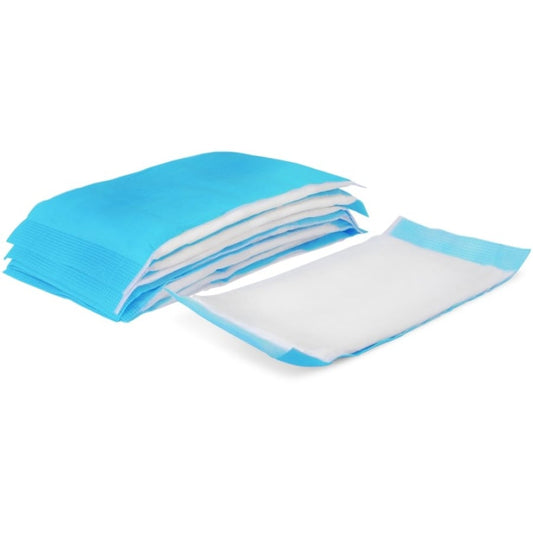
When higher absorbency is required, absorbent compresses may be appropriate. The MaiMed-Pad-unstertil absorbent compresses (25 pcs./foil pouch ) are suitable for applications where more fluid needs to be absorbed than with simple compresses. They are particularly relevant when absorbent properties are a priority.
Non-woven compresses are suitable for soft and skin-friendly applications. The BeeSana® non-woven compress (non-sterile ) is an example of a compress suitable for various care and treatment areas where a Soft material can be comfortable.
What should you look for when buying compresses?
When purchasing compresses, you should first determine what they will be used for. For simple cleaning or padding tasks, non-sterile compresses may suffice. For the direct care of open wounds, sterile products may be required depending on the situation. Here, the respective requirements and professional guidelines should always be followed.
Material and absorbency are also important. Gauze compresses are classic dressing materials; non-woven compresses usually feel softer, while absorbent compresses are designed for greater fluid absorption. Additionally, size, packaging unit, and handling play a role.
When selecting products for wound care, one should also consider whether the compresses are to be combined with other dressing materials, fixations, or adhesive bandages. This allows the selection to be better tailored to actual needs.
ES and gauze compresses, non-woven compresses, or absorbent compresses—which is suitable for what?
ES and gauze compresses are among the classic types of compresses and are suitable for many general care tasks. They can be used for covering, cleaning, or padding and are available in various sizes
.Non-woven compresses are usually soft and lint-free. They are particularly suitable for areas where a comfortable feel and gentle application are important. Depending on the product, they can be used for cleaning, covering, or care.
Absorbent dressings are designed primarily for fluid absorption. They are suitable when wound exudate or other fluids need to be absorbed and a simple dressing would not be sufficient.
Slotted compresses have a special shape with a slit and are frequently used in conjunction with access points, drains, or similar applications. Here, it is particularly important to select the appropriate size and design for the specific purpose.
Usage and Guidelines for Compresses
Compresses should be stored clean, dry, and in accordance with the manufacturer’s instructions. Before use, it is important to check whether a sterile or non-sterile variant is required. Packaging should only be used if it is undamaged.
When applying the compress, it should be selected to match the size of the wound. It should adequately cover the affected area without being unnecessarily large or too small. Depending on the application, a bandage, adhesive bandage, or fixation material may also be required.
Non-sterile compresses are not automatically suitable for every direct wound application. In case of uncertainty, major injuries, or special requirements, professional medical staff should be consulted.
Complementary products for compresses
These complementary categories help to expand your supply in a practical way. While compresses are used for covering, cleaning, or absorbing fluids, wound dressings, bandages, and first-aid products complement wound care by providing support, protection, and practical supplies for various situations.


